
I know this wound personally
I loathed myself for most of my life.
I stumbled out of a troubled, abusive childhood that wrecked my sense of self-worth before I even had words for what was happening. The cruelest messages came early and they were clear. My stepfather had a “nickname” for me. He called me the Big Idiot. And for a long time, some part of me believed him.
But I was resourceful. And like so many people carrying this wound, I found a way to compensate. I became a TV and radio news reporter, anchor, and producer – work I genuinely loved and was good at, but also work that fed the approval I craved. It’s a well-worn path among the emotionally wounded: build an impressive exterior, and maybe the interior will catch up.
It doesn’t. The emotional pain was a barbed wire shredding my inner life, no matter how much external validation I collected.
In my late 50s, I careened into the Emotional Liberation method – a body of work that finally cracked open what all those decades of pain were actually about. Today, I have the calm and clarity I spent decades searching for. This emotional release work got me there. And because I know the cost of living at war with yourself, helping others find their way out of this hell has become my life’s purpose.
What low self-worth actually is
Low self-worth is Shame. Not guilt – Shame.
Guilt says: I did something wrong. Shame says: I am something wrong.
It’s the feeling of being fundamentally defective, less than, undeserving. It’s the inner voice that compares you to others and always finds you lacking. It’s the exhausting work of pretending to be fine while feeling, underneath, that you’re not quite enough to deserve the things you most want.
Shame is the most debilitating of the seven core emotions in the Emotional Liberation method – and the most hidden. Because when you feel it, the last thing you want is for anyone to see.
Where it starts
It starts early. Much earlier than most people realize.
From the moment we arrive in this world as infants, we are looking up – reading faces, reading rooms, learning whether the world is safe and whether we are welcome in it. Good parenting, bad parenting, neglect, criticism, rejection – all of it shapes the initial self-concept. The child doesn’t think: “my parent is struggling.” The child thinks: “there is something wrong with me.”
We are social animals. We are wired to belong. Rejection, to a developing nervous system, doesn’t just feel bad – it feels like a threat to survival. So we adapt. We mold and conform ourselves to what we believe others want. We learn which version of ourselves gets approval and which version gets pushed away. And we begin, without knowing it, to abandon ourselves in order to stay safe.
The self-concept that forms in those early years becomes the lens through which we see everything that follows. What you believe you are worth determines what you believe you deserve. And what you believe you deserve is what you allow into your life.
The self-fulfilling prophecy
Survival-based beliefs formed in childhood don’t stay in childhood. They travel.
If you learned early that the people who love you will also hurt you, your nervous system files that away as truth. Not as a thought but as a felt reality. And once that belief is in place, it becomes a self-fulfilling prophecy. You don’t just attract situations that confirm it, your belief system expects them, tolerates them, normalizes them.
The beliefs shape what you accept, what you pursue, who you let in and what you decide you deserve. It can drive you to chase external validation compulsively… achievements, relationships, status, approval, hoping that enough of it will finally make you feel worthy. It won’t because the wound isn’t out there, it’s in here.
What the feeling is trying to tell you
Here’s what most people miss: the pain of low self-worth isn’t a mistake. It’s a signal.
Whenever it feels bad to be you, that’s a signal, a gauge that you’ve lost contact with who you actually are. Not who you were told you were. Not the version that learned to perform, conform, and shrink, but your actual self.
The discomfort (or the torment!) is the emotion doing its job. Shame, like all the difficult emotions in our EL framework, has a function. It’s not a verdict, but a message. And that message – received, understood, and worked with – is the beginning of the path back to yourself.
This is the central insight of the Emotional Liberation® method: emotions aren’t your tormentors. They’re your most honest guides. The physical sensations get your attention. The feeling demands that you listen. And when you finally do, something begins to shift.
“Low self-worth isn’t who you are. It’s a story that formed before you were old enough to question it.”
– Becca Williams
What the research says
Research consistently confirms what practitioners have observed for decades: low self-worth and shame are deeply intertwined, and both have roots in early experience.
A 2025 paper published in Frontiers in Neuroscience found that low self-esteem is associated with measurable changes in prefrontal brain regions governing emotional regulation and self-referential processing, the same regions involved in depression and chronic stress.[1]
A 2024 study published in Cogent Mental Health found that over-reliance on external approval to maintain self-worth is strongly associated with internalized shame and self-stigma, confirming that approval-seeking doesn’t resolve the wound, it deepens it.[2]
And research published in the British Journal of Psychiatry in 2025 described shame as a pervasive, multidimensional emotion influencing brain, body, and social life, one whose toxic forms drive withdrawal, self-silencing, and mental illness.[3]
The picture is consistent: this is not a mindset problem. It is a body-held, nervous system-encoded pattern with measurable neurological consequences. Which is precisely why the work of healing it has to happen at that level.
How the Emotional Liberation work addresses low self-worth
The mind houses the beliefs. “I’m not enough.” “I don’t deserve this.” “This is just who I am.” Those thoughts feel like facts, and no amount of positive thinking or affirmation reliably dislodges them.
In the Emotional Liberation work, we set the thinking mind aside and go directly to the raw emotion underneath. Not to analyze it. To feel it. To let it move.
Beneath the belief that you’re worthless is almost always a younger version of you who was treated as though you were. And that younger self isn’t looking for logic – they’re looking to be heard, witnessed, and finally released from the role they’ve been playing.
The practices we use – psycho-spiritual inquiry, body-based movement, breath, sound, and for some, the conscious use of plant medicine – are calibrated to move what the mind alone cannot reach. The work doesn’t replace the wound with a better story. It heals the wound itself.
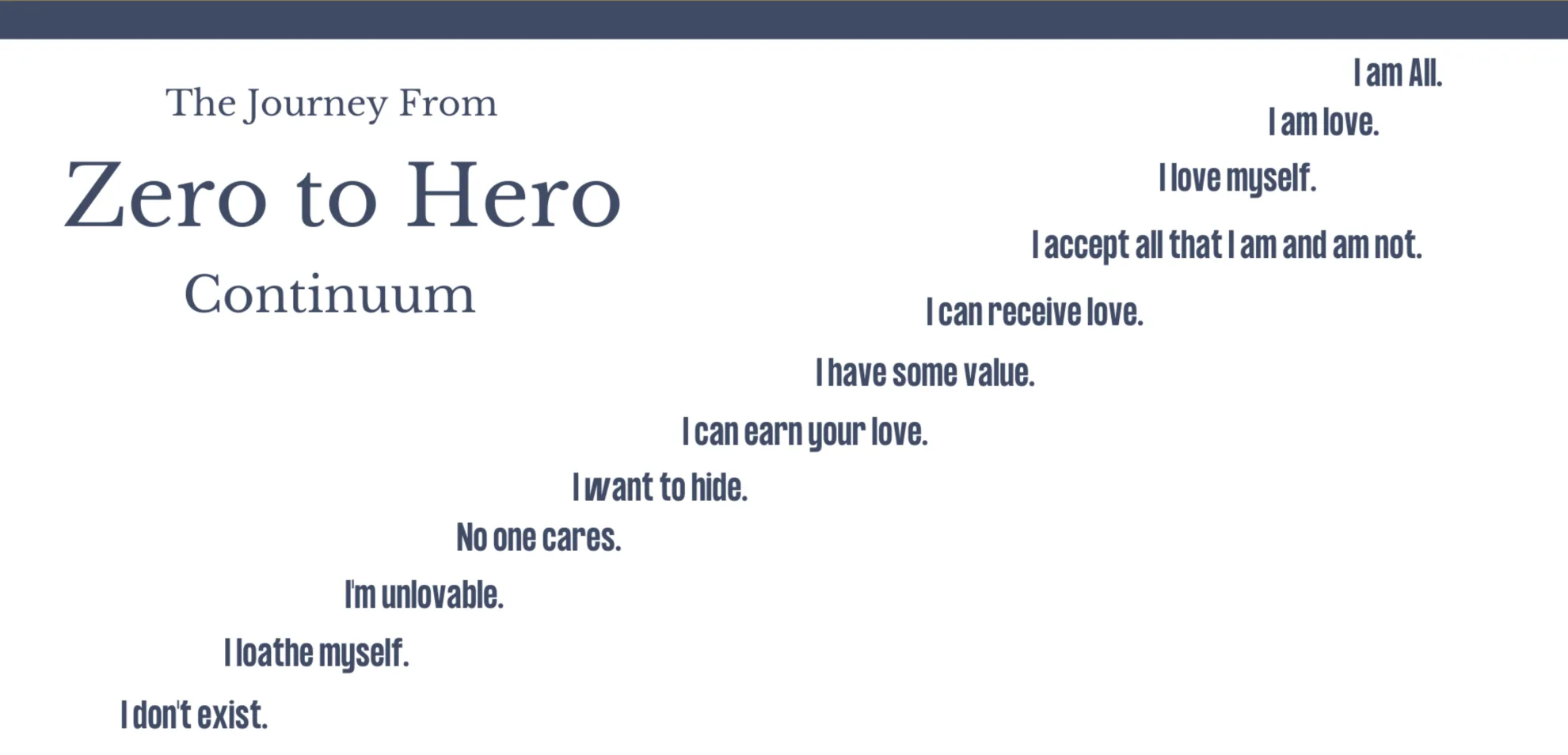
What becomes possible on the other side of that healing is what I call the journey from “worthless” to “priceless.” Not as a positive affirmation but as a lived, embodied reality.
My group masterclasses, trainings, retreats, and ceremonial gatherings create a dynamic that accelerates this healing. When people do this work together, the healing goes deeper – witnessing and being witnessed is its own powerful medicine. Teachers and facilitators often find this work particularly valuable. Understanding these patterns in yourself makes you more effective in holding space for others.
Sources
- Aki, M., Shibata, M., Fujita, Y., Spantios, M., Kobayashi, K., Ueno, T., Miyagi, T., Yoshimura, S., Oishi, N., Murai, T., & Fujiwara, H. (2025). Neural basis of self-esteem: social cognitive and emotional regulation insights. Frontiers in Neuroscience, 19, 1588567. https://doi.org/10.3389/fnins.2025.1588567
- Burwell, R. A., & Bias, S. (2024). Mental health self-stigma: links with social self-worth contingencies and ally support. Cogent Mental Health, 3(1). https://doi.org/10.1080/28324765.2024.2310039
- Lawlor, B., Baez, S., Santamaría-García, H., & Ibanez, A. (2025). The harming power of shame. The British Journal of Psychiatry. https://doi.org/10.1192/bjp.2025.10503