Becca Williams
Search

Start typing to search…

Menu
Get in Touch
Stories

Practices for emotional and nervous system change

Understanding your emotional patterns is the beginning. But understanding alone doesn't create change. If it did, everyone who'd ever been to therapy would be healed. Anxiety, trauma, and chronic stress don't live in the mind. They live in the nervous system, in the tissues, in the energetic architecture that yogic science and esoteric teachings have mapped for thousands of years. That is where the work needs to happen. Emotional Liberation® reaches that level through psycho-spiritual inquiry, expressive and active movement, and breath and body-based kriyas rooted in the Kundalini tradition. These are not relaxation techniques. They are not coping strategies. They are tools that meet the nervous system where it actually lives, interrupting the loops that talking alone cannot reach. And for those who choose it, conscious plant medicine deepens that access further. You're here because you sense that understanding at the thinking level isn't enough. You need something that can process and release what understanding alone never could.

Practices

Go Deeper

Each practice works toward the same goal: building the awareness and the strength to feel what you’re feeling, and to understand why you’re feeling it.

That might sound simple. It isn’t. Most of us have spent years developing strategies to avoid exactly that. The practices of Emotional Liberation® are designed to gently condition the nervous system, so that the emotions that once felt unbearable become accessible, workable, and ultimately, transformative.

Breath and body-based kriyas access what lives beneath conscious awareness and begin to stir it. Expressive and active movement gives the nervous system a way to complete what it never finished. Psycho-spiritual inquiry, which is nothing like passive reflection, builds the capacity to stay present with what arises without being consumed by it. And, for many, conscious plant medicine, used ceremonially and with clear intention, can open emotional channels that remain closed in ordinary states.

Behind the Science

The practices of Emotional Liberation are no longer fringe. Multiple meta-analyses across thousands of participants now confirm what practitioners have known for decades: experiential, body-based approaches that integrate intentional movement with inner awareness produce measurable, lasting change in Anxiety, Depression, PTSD symptoms, and nervous system regulation. The evidence doesn’t just support these methods – it explains why they work.

But the science only tells part of the story. What the research is beginning to confirm, yogic science and the esoteric traditions have understood for millennia: that the body, the nervous system, and the intuitive intelligence of the deep inner knowing are not secondary to the mind. They are its equal – and in many cases, its guide. The patterns that generate suffering don’t originate in conscious thought. And they don’t resolve there either.

Palliative medicine

PSilocybin for psYCHological and existential distress in PALliative care (PSYCHED-PAL): A single arm unblinded clinical trial.

A clinical trial found that microdose psilocybin was safe and feasible in palliative care, with 69% of participants reporting meaningful global improvement and 72% showing significant reductions in demoralization — suggesting it may offer a scalable, low-risk option for existential and psychological distress near the end of life.

A two-centre Canadian clinical trial testing microdose psilocybin in 20 adults with advanced, incurable illness and severe psychological distress, most with a prognosis of 1-12 months. Participants received escalating daily oral doses over three weeks (1mg, 2mg, then 3mg). No serious adverse events were reported. Of the 13 who completed the intervention, 69% reported meaningful global improvement, 62% reported over 50% improvement in depression scores, 54% in anxiety scores, and 72% in demoralization scores.

Read the study


Journal of affective disorders

The efficacy of psychotherapeutic interventions for prolonged grief disorder: A systematic review

A systematic review of 30 RCTs found that psychotherapeutic interventions for prolonged grief disorder produce meaningful improvements, with experiential approaches combining exposure, EMDR, and mindfulness showing particular promise for trauma-related grief — pointing toward the need for personalized, body-inclusive treatment models

A systematic review of 30 randomized controlled trials (2011-2024) examining treatments for Prolonged Grief Disorder (PGD) -- a newly recognized diagnosis in ICD-11 and DSM-5-TR affecting between 9.8% and 34.3% of bereaved people. CBT emerged as the most effective and versatile approach. Innovations combining CBT with mindfulness, exposure therapy, or EMDR showed particular promise for trauma-related grief. Alternative interventions including music therapy and Accelerated Resolution Therapy showed potential but require further research. The authors note limited generalizability due to predominantly white, female, high-income study samples.

Read the study
Proceedings of the National Academy of Sciences

Social rejection shares somatosensory representations with physical pain.

A landmark brain imaging study found that intense social rejection activates the same sensory brain regions as physical pain — providing neurological evidence that emotional pain is not metaphorical but measurably real, processed through the same neural machinery as a physical injury.

A landmark fMRI study of 40 people who had recently experienced an unwanted romantic breakup. When participants viewed a photograph of their ex-partner and thought about being rejected, brain regions associated with the sensory experience of physical pain -- specifically the secondary somatosensory cortex and dorsal posterior insula -- became active. This was the first study to demonstrate neural overlap between social rejection and physical pain in the sensory, not just the emotional, processing regions of the brain.

Read the study
More on the science

Stories, articles & reflections

These pieces offer insight into the practices, the experiences, and the thinking behind the work. What distinguishes an intentional, facilitated practice from something you’d find in a self-help app. What actually happens in the body and the energetic system during a cannabis ceremony. How to recognize when something is genuinely shifting versus when you’re going through the motions. Why stillness is not always the point.

Written for people who want to understand the territory they’re moving through, not just follow a set of instructions.


A detail of the Flammarion engraving featuring a figure in a red cloak reaching through the starry sky into the cosmos, representing deep self-discovery and healing trauma
Trauma

Ok, I claim being a Wise Elder!

By Becca Williams  |  August 13, 2026  |  Updated October 9, 2026

A client called me a wise elder after one line pulled back something he didn’t expect. Here I unpack what he found on the other side, what he actually took from…

Read more
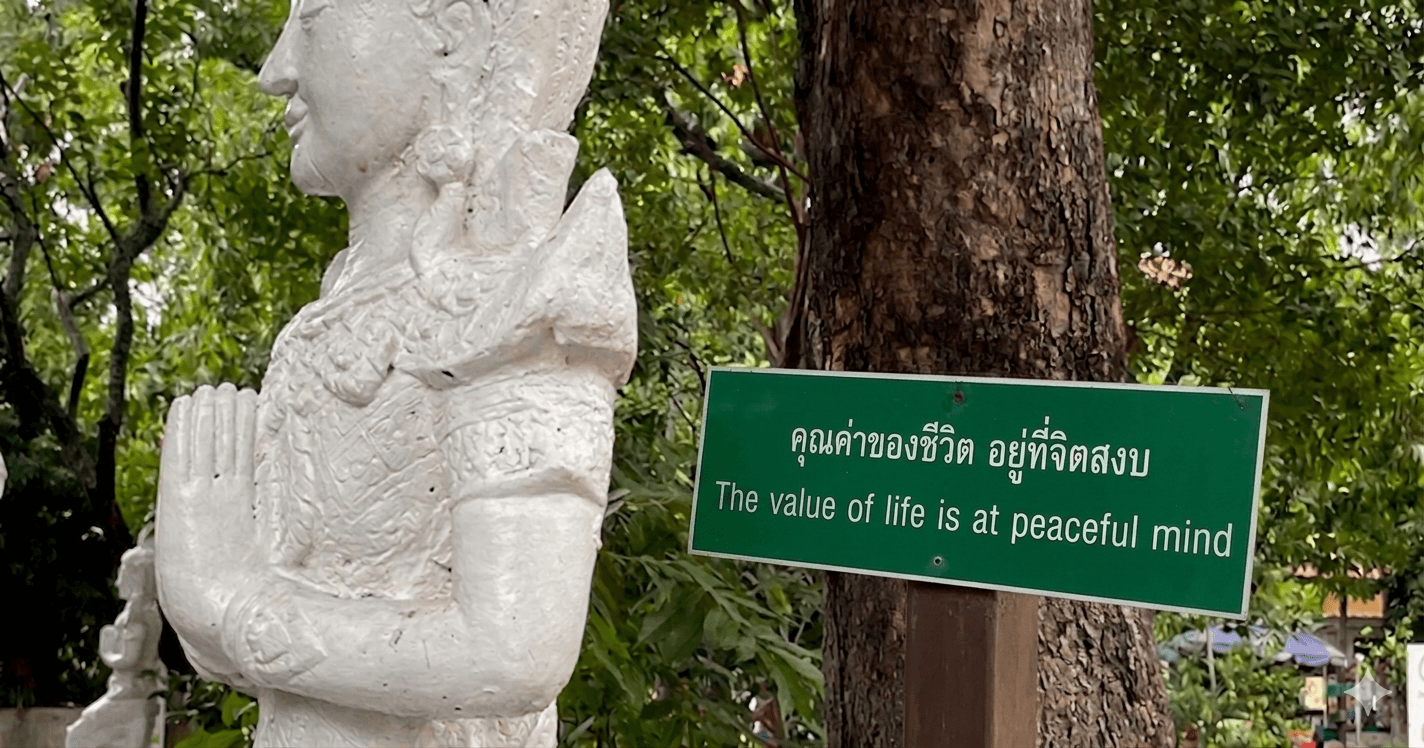
A picture of a statue of Krishna with a sign that reads The value of life is at peaceful mind
Conscious Cannabis

UnMeditation + Cannabis = Success

By Becca Williams  |  April 29, 2026  |  Updated October 7, 2026

If sitting still on the cushion makes your mind louder, you’re not alone. For many, quiet mindfulness meditation amplifies what’s unresolved. There’s another ve…

Read more
Becca's emotional liberation practice on the A Gentle Practice to Ease Stress and Anxiety
Anxiety

Do this and let’s make a date

By Becca Williams  |  March 12, 2026  |  Updated October 8, 2026

Doom-scrolling has competition, and it’s not pretty. When the weight of the world lands in your chest, Tonglen offers something rare: a way through that doesn’t…

Read more
Gravity Sandra Bullock - Panic
Anxiety

When Panic Hits

By Becca Williams  |  March 5, 2026  |  Updated October 9, 2026

Panic isn’t weakness – it’s a survival system no one taught you to work with. The goal was never to become fearless. It was always to become steady enough to fi…

Read more
Defying dystopia & being 69-ish
Anxiety

Defying dystopia & being 69-ish

By Becca Williams  |  January 10, 2025  |  Updated October 7, 2026

I’ve had a strange compulsion since Trump won the White House – I’m drawn to dystopian films and series. And, at the same time, I find myself reflecting deeply …

Read more
Plant Power: Canna Elevation Ceremony scheduled
Anxiety

Plant Power: Canna Elevation Ceremony scheduled

By Becca Williams  |  December 10, 2024  |  Updated September 12, 2026

There’s a lot more going on here than simply firing up the plant – but she’s a mighty potent friend when we want to go deep! Oh sure, I work with mushrooms too …

Read more
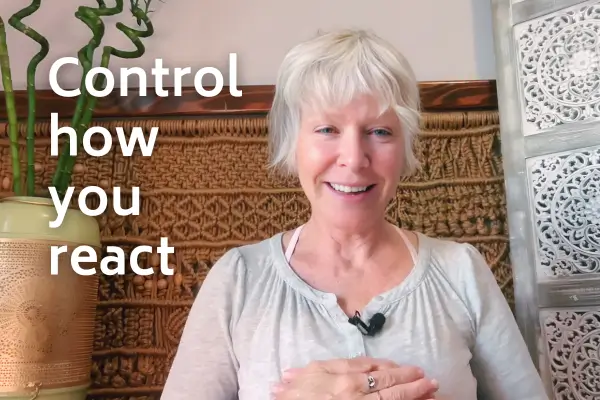
Control how you react 
Anxiety

Control how you react 

By Becca Williams  |  November 7, 2024  |  Updated April 14, 2026

Buddhist monk Thich Nhat Hanh was asked, “Aren’t you worried about the state of the world?” “I allowed my self to breathe,” he answered. “And then I said, ‘What…

Read more
Kundalini Awakening and Enlightenment 
Emotional Triggers

Kundalini Awakening and Enlightenment 

By Becca Williams  |  October 23, 2024  |  Updated September 12, 2026

I frequently hear from folks who tell me that they’re going through or have gone through what’s called a “kundalini awakening”.  And they’re either really conce…

Read more
Date set: Cannabis Elevation Ceremony 
Burnout

Date set: Cannabis Elevation Ceremony 

By Becca Williams  |  August 16, 2024  |  Updated September 12, 2026

Oh! Thank you for the exuberant responses to my invitation for coming together for an online Cannabis Elevation Ceremony – my gift to our community.…

Read more
Taking care of yourself. Naval gazing works.
Burnout

Taking care of yourself. Naval gazing works.

By Becca Williams  |  July 12, 2024  |  Updated September 12, 2026

Just a quick note as I’m writing from Thailand (Chiang Mai specifically, in the north of the country). It was a long trip – between 4 flights and hefty layovers…

Read more
More stories

Testimonials

Some came to a ceremony and felt something shift in ninety minutes. Some worked through a masterclass course and rebuilt their relationship with themselves. Some joined a retreat expecting relaxation and left with a nervous system that had been rewired from the inside out. These are their words, unscripted, uncoached, and from every corner of the world.

“I shared some really hard things with the group, and it broke down walls I didn't even know were there.”

Jo K.

USA

“"The medicine is a portal. It absolutely facilitated a deeper experience for me."”

Tori

Canada

“It's the integration part of it that really makes the plant medicines work.”

Sergey

USA

“You discover what’s under all that armor, you see your true essence.”

Betsy L.

USA

“Understanding your patterns is where we begin. But the nervous system doesn’t change through understanding. It changes through experience, repetition, and the kind of practice that reaches where words never could.”

— Becca Williams

When You're Ready

You don’t need to have a practice before you start. That’s what the work builds. And for what it’s worth, the daily practices run about eleven minutes. Easy peasy.

There are several ways to start: My Elevation Ceremony is a complimentary monthly gathering, a low-commitment way to experience what this feels like. Masterclass courses give you the framework and the tools to work with your emotions independently, for life. And for those ready to show up in person, my Portugal retreats are where we do this work live, together. Personal sessions are available for those who need a more individual container before or alongside the group work.

Work with Becca

Several ways to work together

Whether you're seeking emotional release, spiritual insight, or support through a life transition — there's a path for you.

1:1 · ONLINE

1:1 Sessions

Private 1:1 work with Becca. Four or ten-session packages. Starts with a free clarity call to understand your situation.

Book a clarity call

IMMERSIVE · PORTUGAL

Retreats

Deep-immersion emotional work in a contained retreat setting. Group processing, ceremony, and integration over multiple days.

View upcoming dates

COURSE · ONLINE

Courses

Learn and practice Becca's full toolkit: her “unmeditation” meditation, plant medicine, and neuroscience-informed inner exploration across a structured course while learning with like-minded others.

View the course
Common Questions

Frequently asked questions

Can I do this alongside medication?+

Yes. Emotional Liberation work can generally be practiced alongside prescribed medication. It works through emotional processing, awareness, and nervous-system regulation rather than through medication itself. If you take prescription medication, continue following your prescriber’s guidance and let them know you’re incorporating this kind of work.

How long does it take to regulate the nervous system?+

Significant improvements in baseline regulation are typically noticeable within 8–12 weeks of consistent practice. More deeply established dysregulation takes longer, but change is always possible given the right conditions.

I understand my emotions intellectually. Why can’t I seem to change them?+

Because understanding and feeling are two different things – and healing happens at the level of feeling.
The nervous system runs its patterns independently of what the thinking mind knows. You can have complete insight into why you react a certain way and still find the same reactions arising. That’s not a failure of intelligence, it’s a description of how the nervous system works. That’s why the Emotional Liberation work engages the nervous system directly – through movement, breath, sound, and psycho-spiritual inquiry.
If you’re wondering whether this work is a good fit for you, the best next step is a complimentary Discovery Session. You’ll complete a client intake form first, then we’ll meet on Zoom to explore what’s possible.

How long before I notice a difference?+

Many people feel a significant shift early in the work, a quality of stillness, relief, or release they may not have experienced before. But the work is not only about feeling better in the moment. It also involves developing a clearer cognitive understanding of your emotions: what you are feeling, where it comes from, how it affects your nervous system, and the patterns that keep it in place.

Over time, with consistent practice, that understanding becomes more embodied. Eleven minutes a day is enough to begin building new neural pathways and training the nervous system to respond differently. The practice builds on itself. What starts as relief in a session can gradually become greater awareness of your emotional patterns, more choice in how you respond, and a different way of moving through your life.

How does microdosing fit into your Emotional Liberation work?+

Microdosing is a tool within a larger method, not the method itself. Emotional Liberation® provides the framework: the cognitive education, the psycho-spiritual inquiry, the expressive movement, and practices that allow difficult emotions to be processed and released. The microdose, when included, amplifies access to that process. It can help people who are genuinely stuck in the thinking mind find a doorway through.

If this resonates for you and you’re wondering whether working with me is a good fit, the best next step is a Discovery Session. You’ll complete a client intake form first, then we’ll meet on Zoom to explore what’s possible.

Is microdosing right for everyone?+

No, and I say that as a clinician. Everyone’s body responds differently. Some people find microdosing transformative. Others find it neutral or unhelpful.

Emotions can often surface, Anxiety included. That’s the material that’s been waiting to come up and be met, and it’s part of the work we do together.

Plant medicine is always optional in my work and never a requirement.

I’ve tried therapy, self-help, everything. Why would this be different?+

Because most approaches work at the level of the mind. They help you understand your patterns, reframe your thinking, develop insight. And that’s valuable. But understanding alone rarely changes the deep emotional patterns that drive behavior, especially under stress.

Emotional Liberation is a method that works where those patterns live: in your body, your nervous system, and the emotional memory that formed before you had words for it. Change at that level isn’t just something you understand. You feel it, and it holds when life gets stressful. It shows up in how you react, how you relate to others, and how you treat yourself.

That’s what’s possible and it starts with a single conversation.

If you’re wondering whether working with me is a good fit for you, the best next step is a complimentary Discovery Session. You’ll complete a client intake form first, then we’ll meet on Zoom to explore what’s possible.

How long does emotional healing take?+

It depends on what you’re healing from and how long it’s been running. Some people feel significant shifts early in the work, something opens that’s been closed for years. For others, particularly those healing from early trauma or long-held patterns of Shame or Depression, the work is slower and more layered.

What I can tell you is that healing is not linear. And the capacity for change doesn’t have an expiration date. Emotional fluency is a skill. It builds with practice, patience, and the right support. Trust the process and trust yourself.

How does plant medicine mesh with the Emotional Liberation work?+

Plant medicine is always optional – and when it is included, many find that it can be a potent tool. For emotional numbness specifically, it can soften the protective layer that shutdown has built, allowing what’s been stored beneath to surface and move. Cannabis and psilocybin are the medicines I work with – and everything you need to know before going in, we cover together.

I’ve had a spiritual awakening but I feel worse, not better. Is that normal?+

Yes, and more common than you might think. Awakening doesn’t erase the emotional material that was already there. In many cases it makes it more visible. The Anxiety, the Grief, the Shame, the old Anger, it can all surface more intensely once the defenses start to loosen.

This isn’t the awakening going wrong. It’s the invitation to go deeper. The Emotional Liberation method is specifically designed to work with exactly this – helping you meet what’s surfacing, process it, and integrate it into a life that actually reflects what you’ve seen. Not by flooding you, but by working carefully within your window of tolerance, so the process is as efficient and effective as it is sustainable.

If you’re wondering whether working with me is a good fit, the best next step is a complimentary Discovery Session → . You’ll complete a client intake form first, then we’ll meet on Zoom to explore what’s possible.

Your Cart

Your cart is empty.