A wound I know personally
For most of my adult life, I had a terrible time with goodbyes.
Kissing boyfriends goodbye, seeing friends off at airports, my dogs going to doggie heaven, even the wrap-up of a retreat or the end of a project I’d loved. The Sadness would wash over me with a deep, heavy gloom. It felt awful and it felt disproportionate, but I couldn’t seem to stop it.
When I began exploring this through the Emotional Liberation® work, supported by cannabis plant medicine, the dots started connecting. The goodbye thing wasn’t about goodbyes at all.
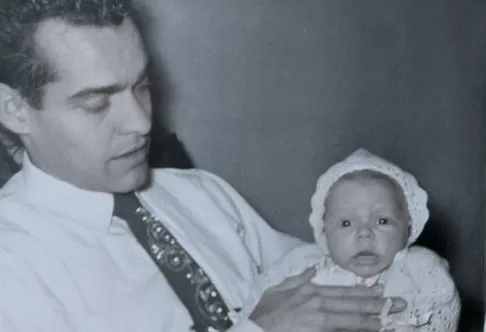
My parents came to hate each other. They divorced when I was about three, and my father moved as far away as he could get. During summers, he’d drive cross country to collect me. But my parents did everything they could to avoid being in the same space, so my mother would equip me with my little suitcase and send me down the dirt driveway, where he’d pull over to pick me up. The return, weeks later, was equally perfunctory, dropped at that same dusty corner, bag in hand, the fun of summer suddenly over.
You can see why any goodbye left its mark on me.
Once I was able to be present with the Sadness and Grief and began exploring it through our emotional release tools, the trauma emerged so it could be processed and released. Today, goodbyes are different. I still feel Sadness when I lose something meaningful, but I’m no longer devastated, no longer consumed with gloom or despair, because I’ve done the emotional release work.
Every experience leaves an impression. The subconscious mind stores the memory of harmful events to prevent them recurring, creating automatic survival responses that operate below conscious awareness. In its time, it was an ingenious form of protection. But you’ve outgrown the threat – and what once kept you safe now keeps you small and stuck.
What makes childhood woundings so potent is the timing. We arrive in this world as infants – fragile, sensitive, and entirely dependent. When tragic things happen before the mind grasps what’s occurring, and before there’s anyone to help us sort through the tangle of emotions, the impact is profound. The younger we are, and the more intense the experience, the deeper the mark. And when the source of the harm is someone who was supposed to protect us, that combination is what we call trauma.
Emotions are not the problem. They are the healing system – rushing forward as sensors, telling us something is off, pointing toward what’s needed. But when we’re young, the mind isn’t yet trained to use that information, and the emotions do what loyal emotions do: they persist in their intensity, because they were never given anywhere to go. Understanding the wound is not enough to heal it. The pattern lives in the body, encoded in the nervous system and the tissues. That’s where it needs to be met, and that’s where the Emotional Liberation work goes.
“All wounds call upon emotion to move steadfastly toward healing. The emotion isn’t the obstacle. It’s the path.”
– Becca Williams
What the research confirms
The science on childhood trauma is now unambiguous. What happens to us early in life leaves measurable traces in the brain.
A 2024 brain imaging study, the largest of its kind on childhood trauma, found that early adverse experiences leave measurable disruptions in the neural networks responsible for emotional processing, memory, empathy, and self-understanding. These disruptions don’t fade with time. They persist into adulthood.[1]
Research consistently shows that childhood trauma puts the brain’s alarm center on permanent high alert, scanning for threat even in situations that are objectively safe. When that alarm fires, the thinking brain, the part responsible for reasoning, empathy, and self-control, loses access. The very capacities you need most go offline at exactly the wrong moment.[2]
There is also a timing factor. Trauma in childhood has a greater impact than the same experience would in adulthood, because the brain’s circuits are still forming. What gets laid down in those early years shapes the architecture of everything that follows.[3]
And here is the most important finding: what was wired by repeated negative experience back then can be rewired by repeated positive experience today. The brain retains neuroplasticity throughout life. The Emotional Liberation work is built to harness exactly this, teaching the nervous system at any age that it is safe to feel, and through feeling to finally process and release what it has been carrying.
The Emotional Liberation approach
In the Emotional Liberation® work, we approach childhood wounds through a multidisciplinary lens – drawing on both the precision of neuroscience and the wisdom of ancient traditions that understood the soul’s role in human suffering long before brain imaging existed.
We start with the thoughts – understanding how the wound formed and why the patterns that developed made complete sense at the time. We know that Shame is a common companion of childhood wounds, and when we can see it as a survival adaptation rather than a personal failing, its grip begins to loosen.
But understanding alone isn’t enough. The wound lives deeper than the thinking mind can reach, and that’s where our experiential work comes in. Psycho-spiritual inquiry, expressive movement, breath, and sound are tools that drop you into your deep inner knowing, beneath the story the mind has been telling. That’s where the wound actually lives, and that’s how it can finally be felt, processed, and released.
When you reach the root of the wound, something long held finally lets go – and what looked like damage reveals itself as the precise curriculum your particular journey required. The endgame isn’t just recovery from pain. It’s the quality of peace, clarity, and completeness that the ancients called the experience of soul.
My group masterclasses, trainings, retreats, and ceremonial gatherings create a dynamic that accelerates this healing. When people do this work together, the healing goes deeper – witnessing and being witnessed is its own powerful medicine.
Plant medicine and childhood wounds
People have been using plant medicine to access and release buried emotional material for centuries. The science is now catching up.
Childhood wounds are often deeply defended. The nervous system learned, for good reason, to keep certain material out of conscious awareness. The judicious use of psilocybin can quiet the brain’s habitual loop of self-talk, creating a window in which old patterns can be accessed and updated in ways that are difficult to reach through the thinking mind alone.
Likewise, cannabis, used ceremonially with clear intention and skilled facilitation, can lower the defenses that keep old wounds inaccessible. In the right container, it can create enough safety for what’s been protected to surface and be worked with directly.
Plant medicine is always optional in this work. When it is included, dosing, contraindications, preparation, and integration are all part of what we cover together. You go in fully prepared.
Sources
- Ireton, R., Hughes, A., & Klabunde, M. (2024). A Functional Magnetic Resonance Imaging Meta-Analysis of Childhood Trauma. Biological psychiatry. Cognitive neuroscience and neuroimaging, 9(6), 561–570. https://doi.org/10.1016/j.bpsc.2024.01.009
- Danese, A., & McEwen, B. S. (2012). Adverse childhood experiences, allostasis, allostatic load, and age-related disease. Physiology & Behavior, 106(1), 29-39. https://doi.org/10.1016/j.physbeh.2011.08.019
- Campbell, K. A. (2022). The neurobiology of childhood trauma, from early physical pain onwards: as relevant as ever in today’s fractured world. European Journal of Psychotraumatology, 13(2), 2131969. https://doi.org/10.1080/20008066.2022.2131969