
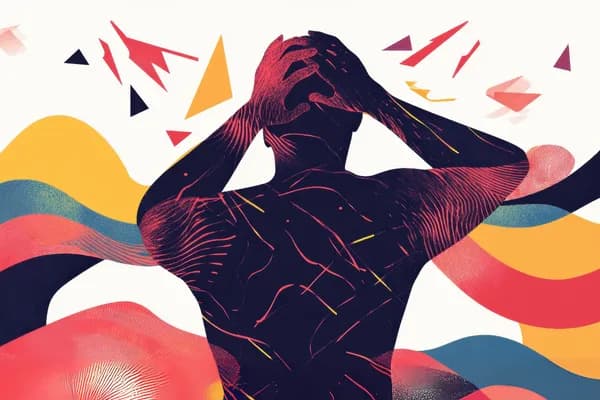
“When my anxiety ramps up, so does my eczema,” one client told me.
It is often the first physical whisper of stored trauma rising to the surface. This mind-body connection is something I see regularly in my work – buried emotions showing up as skin inflammation and flare-ups. Many people who find their way to me have already picked up on the pattern: the more overwhelmed or upset they feel, the more their eczema or psoriasis flares. They want to figure out how to feel better so that, in turn, their physical condition will settle down.
Listening to the skin and body
Because skin issues are so visible, they often draw a more immediate connection to emotional stress. A flare-up on your face or body is hard to ignore – it demands more immediate attention in a way that something like high blood pressure or gut imbalances may not. My approach is about gently tending to your own nervous system because it is where our deepest history lives. But when your skin is screaming? It is loud and wants your attention.

Journalist Jane Brody wrote about this in a New York Times piece on the mind-body connection (gift link):
“The human organism does not recognize the medical profession’s artificial separation of mental and physical ills… An untreated mental illness can significantly increase the risk of becoming physically ill and physical disorders may result in behaviors that make mental conditions worse.”
The problem is two-fold. First, much of the mainstream medical community still treats the body and mind as separate, often ignoring emotional health unless it’s labeled as a diagnosable disorder. Second, our culture tends to stigmatize any sign of mental or emotional struggle –often equating it with “mental illness,” which discourages openness and self-compassion.
As a result, people are left without language or support for what they’re actually experiencing. We start by honoring the weight of your emotional triggers rather than pushing them away. The shame around feeling anxious, overwhelmed, or emotionally raw can make it hard to ask for help, let alone explore how those feelings might be affecting the body. It is possible to move through the tide of daily overwhelm without needing to fix everything at once.
That’s where my work begins. As an emotions therapist, I encourage people to name what they’re feeling without fear of judgment. I believe that finding the grace of your own healing starts with listening to the body. And once they do, we often begin to see a connection: physical issues like chronic pain, fatigue, or skin conditions tend to mirror the inner landscape – tracking closely with anxiety, shame, grief, and other unruly emotions.
When the body holds onto stored trauma
Many of us have learned to “stuff” uncomfortable emotions. And in the context of our trauma history, that stuffing may have been the only option we had to stay safe. In truth, when we carry this kind of stored trauma, it stays tucked away until we are ready to look at it. And now, actually staying present with those emotions – that is being present enough to feel them – can be excruciating.
Still, processing our emotions is better than living with the quiet ongoing torment of those we’ve buried.
While neuroscience is still catching up, there’s growing evidence to support what yogic science has taught for centuries: trauma isn’t just held in the mind, it lives in the nervous system. In fact, research shows that emotional pain lights up the same regions of the brain as physical pain (here’s one study if you’re curious).
So, if we keep pushing our emotions down, where do they go? And what happens to the body when that pain has nowhere to move? Sometimes, the body needs a simple way to calm and reset before it can begin to open.
This is where modern science and ancient wisdom converge.
Neuroscience may still be mapping the full landscape of trauma, but even in the West, there’s growing agreement: the body holds onto past pain. Some researchers call it “stored trauma,” others refer to “somatic memory” or “body-based dysregulation.” In the East, yogic science has long described it as blocked energy. Different language – same truth.
In both systems, unresolved emotions are understood to create inner congestion, interfering with our physical, emotional, and spiritual wellbeing. And both point toward the same solution: turning inward – because it’s only by looking within that we can recognize, process, and ultimately release what’s been stuck.
Finding space to let go
Many Western trauma therapies are embracing tools that have roots in ancient Eastern practices like breathwork, movement, and meditation, all ways of working with the body to access and release what’s stuck.
In Emotional Liberation, we combine these methods to create space for healing. And as my students and clients begin moving the emotional energy they’ve carried for years – sometimes decades – they often report a surprising shift: their physical symptoms begin to ease too. It’s as if releasing the emotional pressure allows the whole system to recalibrate.
Have you noticed this kind of connection between your emotional state and physical health? I’d love to hear what this brings up for you. Drop down to the comments section and let me know.
With love,
Becca
Join the conversation
This piece is part of an ongoing conversation over on Facebook, where our community gathers. Add your voice there — or, if you’d rather share something just with Becca, send a private note.
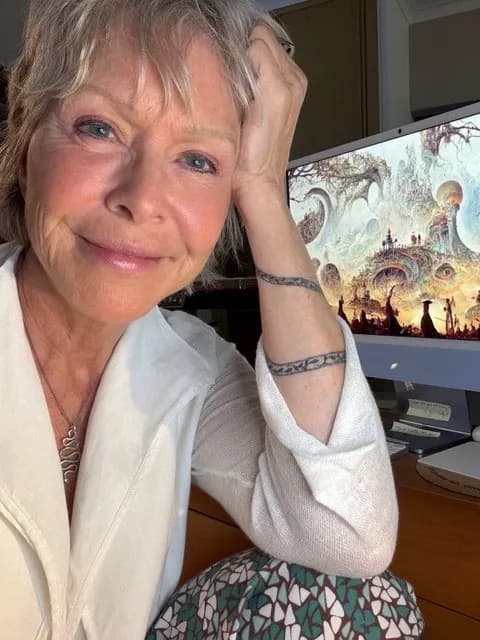
Becca Williams
Emotions Therapist & Registered Dietitian
An Emotions Therapist, Registered Dietitian/Nutritionist, educator, group facilitator, and longtime plant medicine advocate.
More about Becca