
My work sits at the intersection of several disciplines, and plant medicine is one of them. So I make a point of attending at least one psychedelic science conference each year. I’m interested in more than the presentations. I want to know who’s showing up, what conversations are happening between sessions, and what’s appearing on the tables in the exhibit hall. The formal program gives you one perspective on the field. Everything around it adds texture, context, and sometimes a few surprises.

This year, I attended ICPR, the Interdisciplinary Conference on Psychedelic Research, held just outside Amsterdam in Haarlem. It’s one of the most respected psychedelic research conferences in the world, with about a thousand attendees gathered from dozens of countries. Of those, 142 were American and 40 were Australian. The rest were mostly European.

The crowd skewed heavily toward psychiatrists, psychotherapists, and researchers. And I find that both reassuring and a little interesting. Reassuring because scientific rigor is important to be sure, especially in a field that has spent decades trying to be taken seriously.
And interesting because most of these medicines didn’t emerge from university research labs or medical institutions. Many of the medicines have long histories of ceremonial, spiritual, and community use that predate today’s modern science. As they move further into clinical and academic settings, an important question arises: Who gets to decide their purpose and potential?
What was on the ICPR conference stage
My work sits at the intersection of several disciplines, and plant medicine is one of them. So I make a point of attending at least one psychedelic science conference each year. I’m interested in more than the presentations. I want to know who’s showing up, what conversations are happening between sessions, and what’s appearing on the tables in the exhibit hall. The formal program gives you one perspective on the field. Everything around it adds texture, context, and sometimes a few surprises.
Several panels were devoted to negative findings from clinical trials. I appreciated that as it reflects a field that’s increasingly willing to engage with complexity rather than simply spotlighting promising results. For example, LSD microdosing, as it turns out, is no more effective than placebo for depression.
A ketamine study on suicidality found no difference compared to a standard benzodiazepine. These weren’t fringe critiques coming from outside the field. They were findings presented and discussed by the researchers themselves.

Also worth knowing: to date, no studies have examined the efficacy of a non-hallucinogenic daily dose of psilocybin for Generalized Anxiety Disorder. We call it “microdosing” and given all the attention psilocybin has received as an anxiety treatment, it’s surprising how little research has focused on the microdosing approach.
And something that will be important to many who are interested in treating their health challenges with psilocybin: there are now indications that stopping SSRIs (and SRIs more broadly) before a full-dose psilocybin experience may not be necessary.
That counters a long-held assumption, and for a lot of people it’s a relief to hear. Practitioners and the people they work with have been told they need to taper off antidepressants before taking psilocybin. Coming off those medications isn’t always simple or comfortable, and for some people it’s a daunting prospect.
The program also went deep into mystical experiences, ego dissolution, and the nature of consciousness – right alongside the clinical trial data. Three big names in consciousness research actually debated whether psychedelics tell us anything fundamental about the nature of reality. I didn’t find any of that jarring alongside the hard science. To me, that’s exactly what this field is, science trying to make sense of experiences that science didn’t invent and can’t fully explain.
What was in the ICPR conference halls
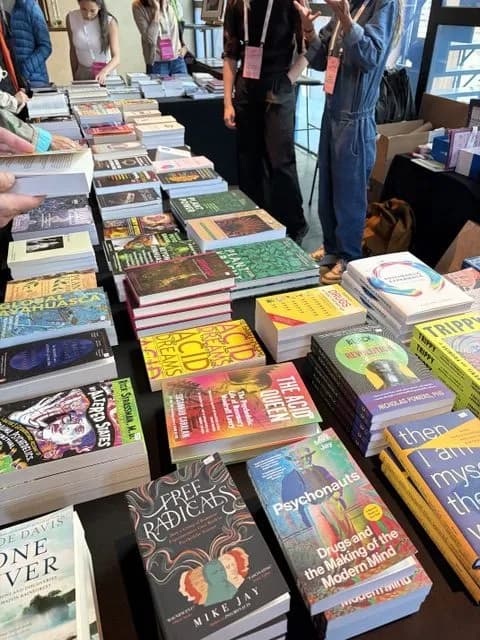
The exhibit tables were a different vibe entirely.
Schools were actively marketing certificate programs in psychedelic-assisted therapy, enthusiastically, and in numbers. Psychedelic-Assisted Therapies and Research certificates, psychedelic studies programs, the full range was represented.
Programs range from a few hundred dollars for online courses to upwards of $20,000 for full clinical training, which makes it worth asking where exactly these graduates practice when they finish, given how restricted the legal landscape still is almost everywhere.


Flyers for psychedelic retreats from around the world were strewn across every available surface. Tables selling shamanic goods lined the hall – rattles, Shipibo textiles and jewelry, ceremonial rapé, and other items from Amazon basin traditions.
Tables of the sacred and the commercial sat side-by-side, which tells you everything about where psychedelics are right now.
Tables of the sacred and the commercial sat side-by-side, which tells you everything about where psychedelics are right now.


The hallway conversations felt energized but also a little uncertain. The field is moving fast… faster than the regulations, faster than the job market, faster than the legal frameworks that would let any of this scale cleanly.
The conference was a reflection of the field, where the science is maturing, the commerce is accelerating yet the wisdom, Indigenous traditions are still mostly watching from the edges.
If psychedelics are on your radar, even just out of curiosity, it’s worth watching where all of this is headed. I’d love to hear your thoughts in the comments.
With Love,
Becca
P.S. One notable absence: cannabis. In my work, I bring cannabis in as a plant medicine tool – from microdosing to full psychedelic experiences. And across the entire conference program, there wasn’t a single session that addressed it. Yes, there are conferences dedicated specifically to cannabis. Still, the broader psychedelic community’s tendency to leave it out of the conversation leaves this versatile and extraordinary plant medicine marginalized in an arena where I think it should get some attention.
Join the conversation
This piece is part of an ongoing conversation over on Facebook, where our community gathers. Add your voice there — or, if you’d rather share something just with Becca, send a private note.
Becca Williams
Emotions Therapist & Registered Dietitian
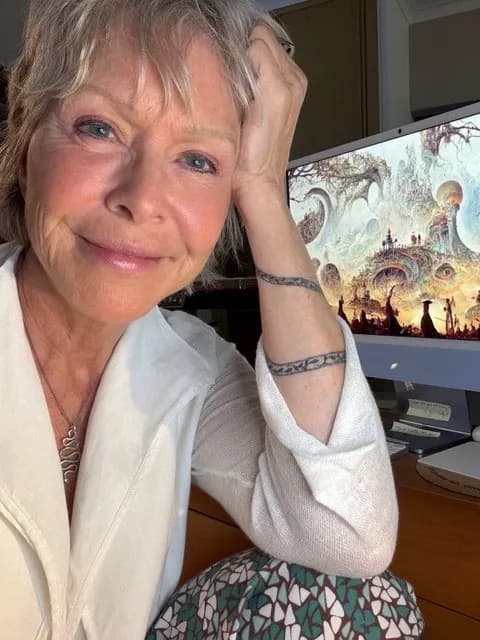
An Emotions Therapist, Registered Dietitian/Nutritionist, educator, group facilitator, and longtime plant medicine advocate.
More about Becca