

Yes, let’s talk brown spots – those little patches of pigment that pop up uninvited. For me, this whole journey has become less about my skin and more about healing the mind that judges it so harshly. They go by many names: age spots, sun spots, liver spots (which is both misleading and mildly alarming), and my personal favorite –”wisdom freckles.” …because if we’re going to have them, we might as well make them sound poetic 😂
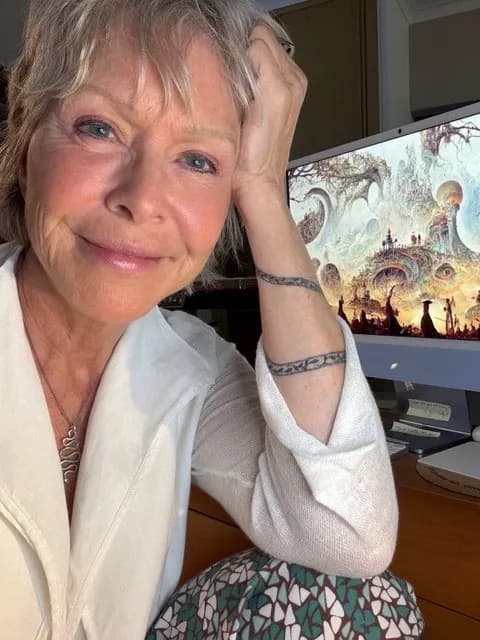
Whatever you want to call them, they have officially claimed real estate on my face. That’s right – not just my hands, arms, or décolletage, but right there, front and center. No hiding. No subtlety. Just a full-blown pigment parade marching across my cheeks and wherever else they feel like setting up camp (they’re starting to claim my neck too).
I used to think of them as mere blemishes, something to be covered with a little concealer or a strategically styled sidecut because of old shame and guilt about aging. But now? Now I’m recognizing them for what they really are, for better or worse, a permanent part of my identity. My face has spoken, and it has spoken in little brown spots that stir up sudden emotional triggers whenever I look closely in the mirror.

Back when sunscreen was for wimps
Like many of us who grew up in the “sunscreen is for wimps” era, I spent my younger years baking, not protecting. Remember baby oil and iodine? SPF was a foreign concept, and nobody thought twice about what unprotected sunbathing does over decades. Sunbathing? A competitive sport. I slathered myself in baby oil and made sure my tan lines were so crisp they could double as road markings.
A spot for every summer
Fast forward a few decades, and guess what? My skin remembers. It remembers everything, almost like holding onto past skin trauma from all those summers. That week-long spring vacation trip in ‘79? There’s a spot for that (I’d bet on it!). The summers of sun-worshipping? Spot, spot, spot. And that one time I actually got a sunburn so bad that the front side of my body and face peeled like an overripe banana? I’m not sure, but there’s probably a dark patch commemorating that event.
Those beauty ads whisper, “You can fix this”
Of course, let’s be real. There’s a multi-billion-dollar industry built on “making me feel bad about these spots.” Creams, serums, lasers, chemical peels – every beauty ad whispers, “You can fix this.” I’ve put my time in – I’ve dabbled in fading treatments, like Hidrospot Gel, but I have usually defaulted to concealer when I shoot videos and do video podcasts.
Healing the mind, not fixing my skin
But through this Body UNshaming assignment and my own journey toward healing, I’m beginning to wonder why I should wage war against something that’s completely natural? Would I be more beautiful if my skin were spotless? Maybe by society’s impossible standards. But, these days, I’d also be less me.
I’m still figuring out how to see them
Instead of hiding my brown spots, I’m starting to reframe them – well, it’s an experiment right now, we’ll see where it goes.
Besides, I remind myself, nobody else cares about my spots. The people who love me don’t see my skin as a problem to fix. They see “me.” And if I can see myself with that same kindness while choosing strength for personal empowerment, then maybe, just maybe, I’ll stop seeing these my spots as imperfections and start seeing them as part of the unique, aging (and still fabulous) human masterpiece that I am (that we all are).
My homework is that whenever I catch my reflection and wonder where my once-even complexion went, that I’ll remind myself:
- I have better things to concern myself with than a little extra pigment.
- My skin is not supposed to look like it did when I was 20. That would just be weird (and it is weird when we see movie stars and such looking like they’re frozen in time – it’s unnatural and often the result of extreme measures).
So, once again 🙄, my homework isn’t about fixing my skin. It’s about fixing my mindset and healing the mind. Whenever I catch my reflection, I’ll (do my best to) choose to see strength, wisdom, and the story my skin tells, rather than flaws that don’t define me, which brings true liberation from impossible standards.
Do you have moments when your reflection challenges your self-perception? I’d love to hear how you approach self-acceptance and what perspectives have helped you along the way. Drop down to the comments section and let me know!
With Love,
Becca
Join the conversation
This piece is part of an ongoing conversation over on Facebook, where our community gathers. Add your voice there — or, if you’d rather share something just with Becca, send a private note.
Becca Williams
Emotions Therapist & Registered Dietitian
An Emotions Therapist, Registered Dietitian/Nutritionist, educator, group facilitator, and longtime plant medicine advocate.
More about Becca