In a year of democratic backsliding, Portugal draws a line where others have erased theirs.
This isn’t my usual kind of post. But I figured the world has enough generic holiday cheer, so here’s something with a little more weight…
I’ve been living in Portugal for a little more than three years now, and while I wouldn’t call myself an expert on the country, I’ve picked up more than the language, the rituals, and the way history lingers – in tiled walls, quiet bookstores, and the corners of cafés where no one’s in a hurry.
Around this time of year, as the holidays settle in and everything slows down, I’ve been thinking a lot about what it means to live in a country that still believes, in some stubborn way, in justice. Let me say more.
As the year winds down and the season turns reflective, Portugal gave us a moment that felt rare, a democracy standing up for dignity when it would’ve been simpler to let racism pass as politics.
While much of the West is sliding deeper into populism and far-right rhetoric dressed up as political “honesty,” Portugal, for all its imperfections, continues to push back.
And I wanted to share a little moment that reminded me why I continue to find this country deeply admirable.
Ventura vs. Everyone (and the Court, Specifically)
If you follow Portuguese politics, you likely already know the name André Ventura, leader of the far-right Chega party… equal parts populist firestarter and headline generator. Ventura has a habit of saying the quiet part loud, and then acting shocked when people don’t thank him for it.
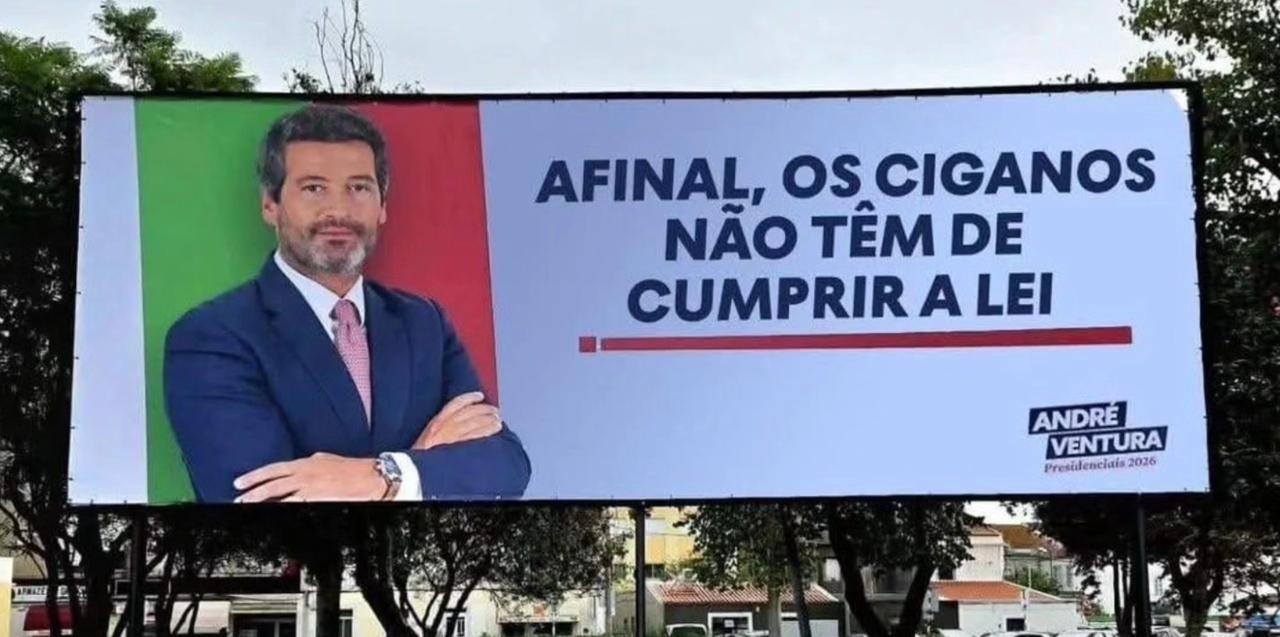
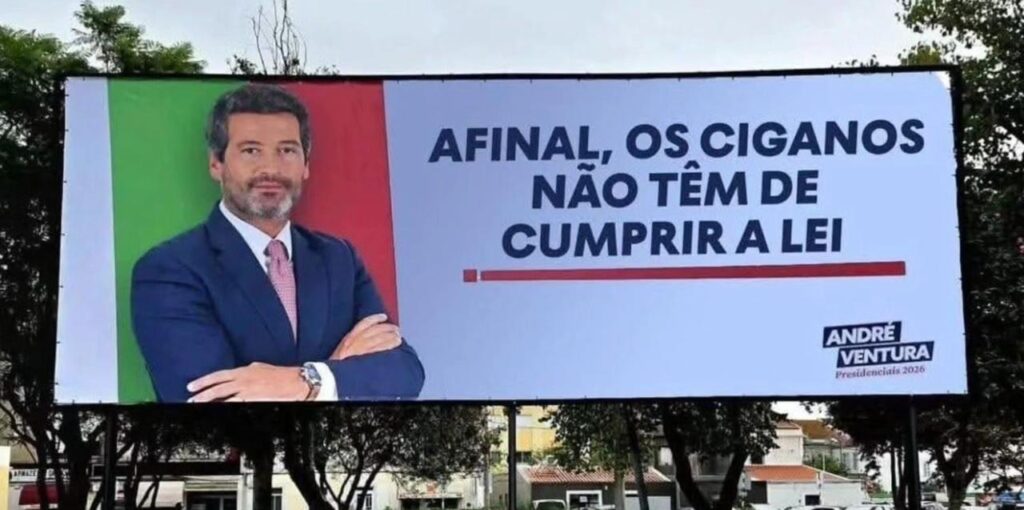
This time, his campaign plastered public spaces with billboards that read: “Gypsies must obey the law – André Ventura presidential elections 2026.”
You know, the kind of seasonal messaging we all love to see on our way to the market.
The implication wasn’t subtle, and the damage wasn’t theoretical. Portugal’s Roma community, already subject to systemic discrimination and social marginalization, was once again made the political scapegoat by Chega’s hand.
But something remarkable happened. This week, a Lisbon civil court ordered all the billboards to be removed within 24 hours, and levied a daily fine of €2,500 per billboard for noncompliance.
The judge cut straight through the noise. She wrote that Ventura’s message was “designed to cause a specific social impact” and that it reinforced “the mistaken idea that there is an ‘us’ and a ‘them.’”
The court ruled that the billboards were discriminatory, violated the human dignity of the Roma community, and had no place in public discourse under the pretense of “free speech.”
It’s not every day you see a court ruling that reads like a masterclass in moral clarity. At least not these days.
Even more telling: Chega’s face, André Ventura, admitted in court that yes, he knows there are Roma people who obey the law. He just didn’t feel that nuance had any place on his billboards.
Meanwhile, in the Polls…
Now, before you pop open the vinho verde (green wine) and toast Portugal’s moral backbone, it’s important to note that Ventura isn’t some fringe guy ranting on a corner with a bullhorn. Not any more.
He’s one of the frontrunners in the upcoming January 2026 presidential election. In fact, some polls show him neck-and-neck with independent candidate Admiral Gouveia e Melo, a political moderate who supports democracy and national unity. They’re both hovering around 18-19% support in the first round.
So no, Portugal isn’t immune. But what’s different, and worth admiring, is that even with that political momentum, Ventura is not above the law. The courts still work. The guardrails still hold. And when he crosses the line, people notice.
The Ghosts of Salazar (And Why It Matters)
If all of this weren’t déjà vu enough, Ventura recently told Parliament that “we’d need three Salazars to put this country in order.”
For context: António de Oliveira Salazar was Portugal’s dictator from 1932 to 1968, a man who kept the country under a fascist regime with censorship, secret police, torture, and zero tolerance for dissent. So when a modern politician says “We need three of those,” you’d be forgiven for blinking slowly and checking your calendar. We certainly did here in this country.
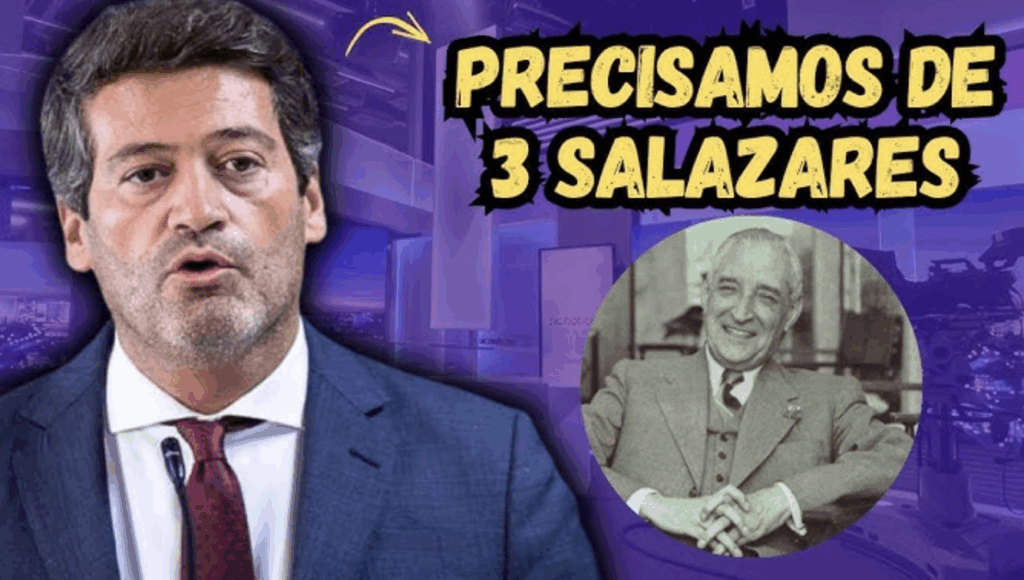
To their credit, Portuguese lawmakers across the political spectrum condemned the remark. Because in this country, authoritarian nostalgia still sparks outrage – and that’s not something every country can say in 2025.
So What’s the Holiday Tie-In?
It might sound like a strange thing to write about during the holidays, when most people are lighting candles and rewatching Love Actually for the 14th time. But I think it’s the perfect moment to talk about justice, and what it looks like in practice.
Because justice doesn’t always wear a cape or arrive in some sweeping cinematic gesture. Sometimes, it shows up quietly, in a courtroom in Lisbon. In a judge’s carefully written decision. In six Roma community leaders filing a civil suit and winning. In a lawyer saying, “This ruling helps us live in a more just and decent country.”
That’s the kind of hope we don’t always recognize when it’s happening in real time. But it matters. And this year, maybe more than most, it’s worth celebrating.
So while André Ventura is out there making noise and winking at dictatorships past (and present), Portugal’s democratic institutions are, for now, holding the line. And that’s a gift worth protecting.
Having said all that, happy holidays from Portugal… where I’m privileged to live, but still watching the same storm clouds gather.
For those of us holding tight to the idea of a freer, fairer world: may our institutions endure, may our courage deepen, and may we remember that democracy isn’t a possession – it’s a promise we remake, again and again.
With Love,
Becca
P.S. This January, I’m hosting a [no cost] online cannabis elevation ceremony – for anyone ready to start the year grounded, expanded, and still committed to building what’s better. Come elevate with intention. Consciousness is the first step toward change.




Thank you Rebecca. What a thoughtful message. Here’s to a free and fairer world. 🙏🤞
Rosemary, let’s toast to keeping hope alive and refusing to settle for less than the world we deserve!
Happy Holidays to you Becca. Thank you for your message. And while we all watch those dark clouds on the horizon, may we be inspired to care for each other and take right action. Your work and voice is so appreciated.
Tori, thank you, your words land with such grounded wisdom. I’m holding onto that: caring for each other and taking right action.
And I’m grateful for your generous encouragement.
Here’s to carrying more clarity, courage, and care into the year ahead.